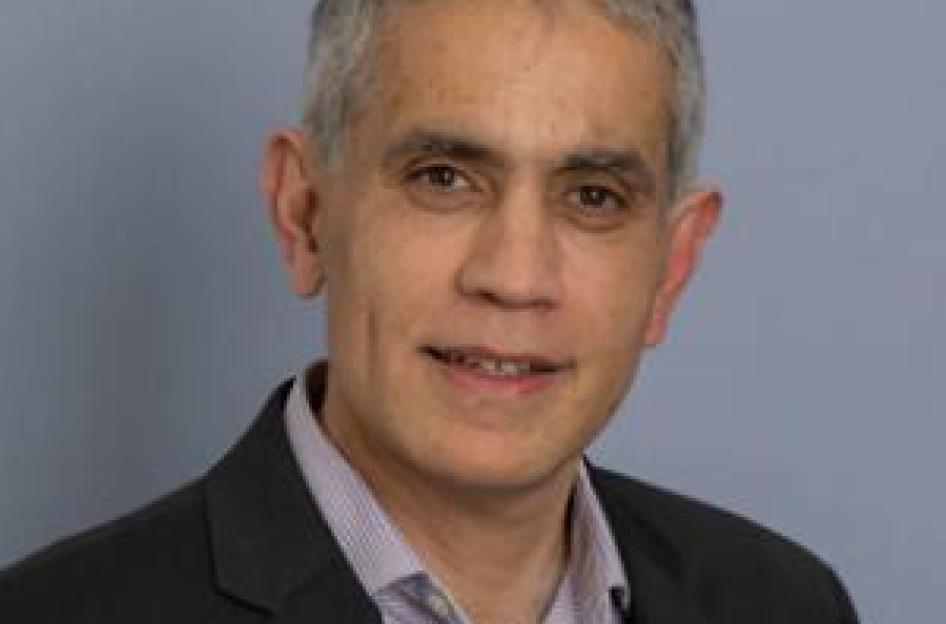

Postgraduate research: Informing systemic change
Master of Addictive Behaviours graduate Fabrizio Lo Cascio discusses his research into vicarious trauma, opportunities for growth, and the organisational conditions that make a difference.

As a Specialist Positive Behaviour Support (PBS) Practitioner and Social Worker with 15 years of experience, Fabrizio Lo Cascio’s clinical work consistently intersects with trauma, substance use and complex psychosocial presentations.
The demands of this work and a desire to improve the sector motivated him to enrol in the Master of Addictive Behaviours with Monash University and Turning Point.
“I chose the course because it offered a depth of rigour that aligned with the realities of front‑line Alcohol and Other Drugs (AOD) practice,” he explains. “The coursework is robust and clinically grounded, bringing together addiction science, policy, neuroscience and behavioural frameworks in a way that translates directly into practice.”
The research stream offered an additional level of depth. “It enabled me to explore lived practitioner experiences with a level of nuance that day-to-day work rarely allows,” Fabrizio says.
Now having completed the program, Fabrizio achieved a High Distinction for the research component and a strong Distinction/High Distinction average across the broader coursework. He credits much of this success to the quality of supervision he received.
“Without the depth, consistency and calibre of supervision provided throughout, this would not have been possible,” he says.
“At one stage, I had three supervisors contributing to my development across the research program. Each brought a distinct style of guidance – technical, analytical and motivational – and this collective support was a major factor in my ability to stay on track and perform at a high standard.”
According to Fabrizio, their combined input strengthened his methodological clarity, refined his conceptual framing and pushed him to produce work of consistently high quality.
New hope: Vicarious post-traumatic growth is possible
Fabrizio’s research examined how organisational and relational conditions shape vicarious trauma and vicarious post-traumatic growth among AOD practitioners.
While the sector often focuses on client risk and resilience, he recognised a critical gap: the structural and relational forces that influence practitioner wellbeing are rarely given the same attention.
His findings offer hope for anyone working in or designing organisational systems and structures in the sector, provided that key requirements are met.
“My findings reinforced that growth is possible,” Fabrizio emphasises, “but only when relational and systemic conditions support it.”
His research identified several relevant factors:
- the importance of psychologically safe team cultures
- the importance of high-quality, trauma-responsive supervision
- the ways that systemic stigma and organisational instability can amplify emotional strain and
- opportunities for meaning-making and growth when organisations invest in reflective practice, provide a stable and supportive environment, and maintain consistency between their values and their actions.
Next steps: A PhD and systemic change to improve clinical safety
Fabrizio is now exploring opportunities to progress to PhD‑level research to investigate how trauma‑responsive organisational cultures influence practitioner wellbeing, retention and the development of vicarious post‑traumatic growth across the AOD and broader mental health workforce.
“Workforce instability, emotional fatigue and ethical strain directly impact service quality and outcomes for clients,” Fabrizio explains. “Strengthening organisational practice is therefore not a 'wellbeing add-on' but a clinical safety issue.”
Future research in this area could inform workforce development, supervision frameworks, leadership training and policy reform, particularly in systems that have historically positioned practitioner stress at an individual level rather than addressing its systemic origins.
Inspired? You too could make an impact
For those considering the Master of Addictive Behaviours, Fabrizio offers clear advice: approach the program with curiosity, make full use of supervision and embrace the research opportunities even if they feel daunting.
“The degree rewards analytical thinking, reflective capacity and a willingness to challenge assumptions about the sector,” he says.
“It is a demanding program, but it genuinely strengthens clinical capability and opens academic pathways that are often unavailable in standard postgraduate training.”
- Contact the Course Director A/Prof Kirsten Schliephake: [email protected]
- Take the next step in your career: explore the Addictive Behaviours Graduate Program.
- Watch the webinar and hear firsthand insights from course leaders and students.
For media enquiries email [email protected] or call 0478 854 644.